
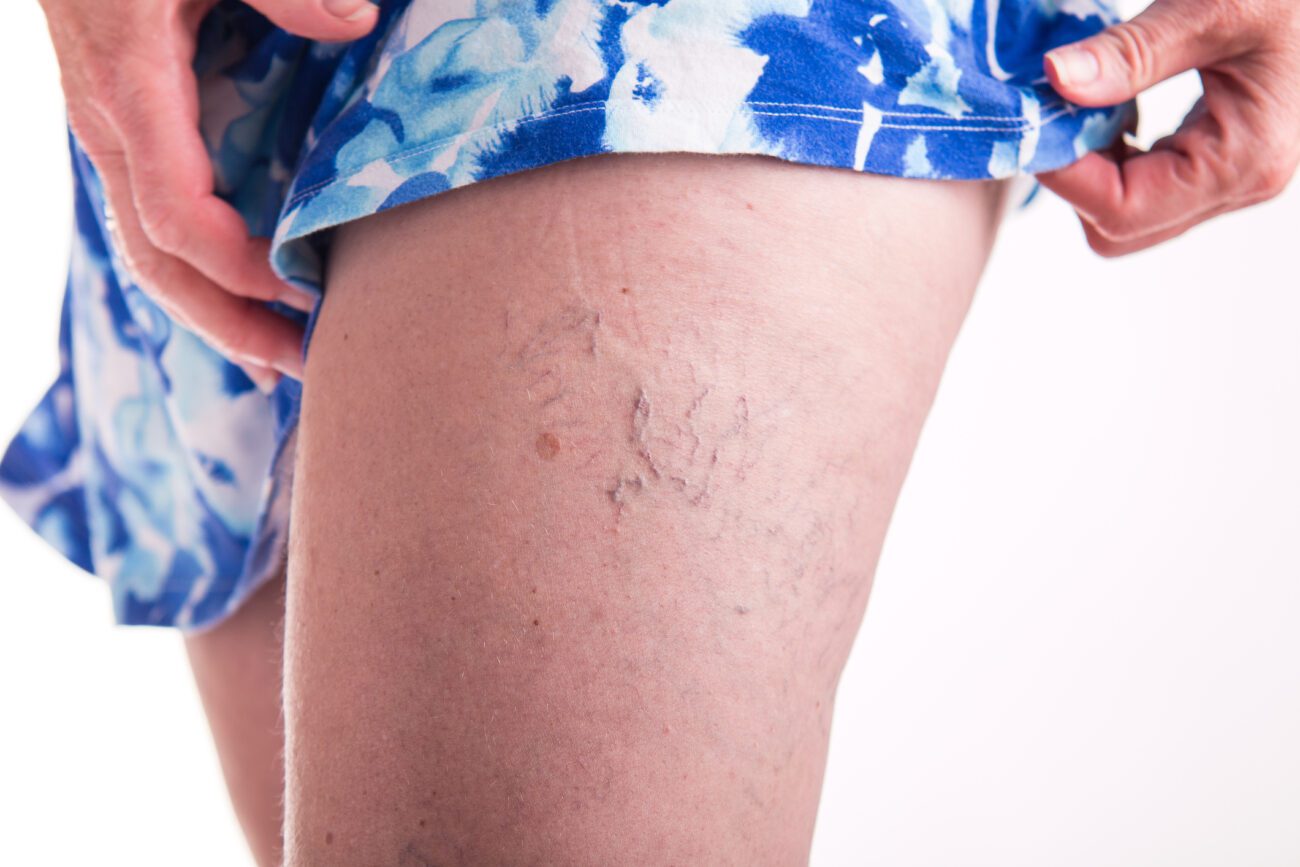
When internal valves in the leg veins begin to fail, blood pools and creates visible veins called spider veins or varicose veins. Vein treatments such as injection sclerotherapy or laser treatment can clear these visible and potentially painful veins from the skin. Here is more information about treating varicose veins and spider veins:
Varicose Veins and Spider Veins
Both varicose veins and spider veins have similar causes and responses to vein treatments, but they differ in symptoms and presentation. Varicose veins appear as twisted and swollen vessels just below the skin surface. These rope-like structures often develop in clusters on the legs or feet, and they can cause pain or discomfort. These veins often form on the lower legs when the walls of a vein become weak and stretch out, causing blood to pool in the vein.
Spider veins differ from varicose veins because they are smaller and flatter. They look like tiny red or blue lines that resemble a dense web. These marks can appear on the face or legs, but they rarely cause physical pain. While spider veins are often a cosmetic concern, they might indicate early stages of chronic venous insufficiency (CVI), which can lead to more serious complications over time.
Signs and Symptoms
A variety of uncomfortable physical sensations in the lower extremities can accompany varicose veins. Muscles in the legs often feel tired or heavy after long periods of activity. The area around a visible vein might itch or feel sore, and some patients experience intense muscle cramps. Since blood cannot flow upward effectively, swelling in the ankles and feet occurs frequently at the end of the day.
Spider veins, while usually harmless, can be an early sign of chronic venous insufficiency, a condition that develops when veins have trouble sending blood from the limbs back to the heart. You might notice your skin feels leathery, or the surface could look reddish-brown. If CVI is left untreated, open sores called venous ulcers may form near the ankles.
Chronic venous insufficiency presents several specific warning signs to watch for:
- Achy or tired legs
- Nighttime leg cramping
- Reddish-brown skin discoloration
- Lower leg edema
- Leathery-looking skin texture
- Open sores near the ankles
Injection Sclerotherapy and Laser Treatments
Two common treatments for vein issues include injection sclerotherapy and laser treatments. Sclerotherapy involves injecting a solution directly into the damaged vein to close it. This procedure causes the vessel to scar, and the body eventually reabsorbs the tissue, and the treated vein collapses while blood reroutes through healthier paths nearby. This treatment works well for small varicose veins and spider veins that appear near the surface of the skin.
Endovenous thermal ablation uses heat to seal off problematic vessels deep within the leg. A specialist administers an anesthetic, inserts a small catheter, and then applies laser or radiofrequency energy. This method treats medium and large varicose veins by closing the source of the pooling blood. The procedure is minimally invasive, and the corrected veins remain in the body.
Recovery from these procedures usually requires very little downtime for the average patient. Most patients can walk immediately after the appointment, but they may need to wear compression stockings and elevate their legs. Follow-up appointments are typical with both treatments, one month later for sclerotherapy and one week later for laser treatment.
Learn More About Vein Treatments
Some people prefer the look of clear skin even if their veins cause no pain. You can choose vein treatments for cosmetic reasons alone. A medical provider can help you decide which treatment method is best for your unique circumstances. Treatment and recovery time are relatively short for both sclerotherapy and laser treatments. To learn more about vein treatments, consult a provider near you.